

'The Kurds: A People Fighting for Their Homeland'
For a long time now I have indiscriminately condemned the Kurdistan Regional Government (KRG) for all it's flaws poking in the eyes of all Kurdish people around the world who not only deserve but are fighting and dying for a freedom they seem to be handing over to our enemies on a silver plate. From the roots of education to healthcare and it's ridiculous sugar-coated friendly nature with Turkey and Iran, the KRG has lost a large amount of credibility in Kurdistan and amongst Kurds globally.
I was reading a book, 'The Kurds: A people in search of their homeland' and the entire book is a recollection of events through the lenses of one man, Mr Kevin McKiernan, who traveled through south, north, east and west Kurdistan to understand the Kurdish people and their struggle. From the fall of Saddam to the publication of his book in 2006 the recollection of Kurdish history is a bloody one. It took me over two months to get through the entire book because I would reach a certain point where I physically couldn't read on. There were times that the book was so drenched with tears that I had to put it out to dry before reading on. The book is a perfect example of a some of the most common sayings amongst us Kurds:
(I) We have no friends but the mountains.
(II) Our worst enemy has always been ourselves
(II) "Darmané dardé galék Kurd ú Kurdistan, yekitîyé"- "Unity is the key to all of Kurdistan's problems"
McKiernan highlights in great detail the blood shed caused after South Kurdistan was given autonomy when Saddam fell. Without US backing Kurdistan would never have survived. From outright civil war between the KDP and PUK, then the KDP attack on the PKK. All for what? Power. Greedy, oily, greasy power.
Since then things have gotten much better between Kurdish political parties and unity amongst the different regions in Kurdistan. Hundreds of years of oppression, repression, genocides and massacres in all four parts of Kurdistan have taken their toll. Yet here we are...
Reading the last paragraph of this book really hit home. We spend so much time criticizing the flaws of the current autonomous government of Kurdistan we forget to appreciate the little things. McKiernan concludes the description of the Kurdish people in a sentence at the end of his book:
"An ancient civilization, a land base, kinship bands, a history of repression, and a struggle to preserve culture and language"
McKiernan emphasizes the importance of our Kurdish warriors:
"If the US occupation of Iraq had succeeded as planned, Washington might have insisted-as it had initially-that all militias in Iraq, including the peshmerge, be disbanded. Without the peshmerge, the homeland security of the Kurds, the dream of federalism- of separateness-might have been postponed."
The peshmerge in South Kurdistan, specifically the KDP went against all morals when they joined with the Turkish army to slaughter the PKK in their own mountains. To make the decision to shed the blood of your own people in your own land, for the sake of an enemy will never cease to make my heart ache and head spin. None of their good deeds will ever make up for the horrendous acts they committed against their own, which makes them no different to the dictators they struggled against for decades. However, sometimes we need to step back and appreciate our people, our land, beautiful culture, unique history and take it in for what it is.
"One of the oldest peoples, the Kurds...now had independence in all but name. The talk of "Iraq's first" would remain a fiction for outside consumption, a necessary means to an end, and the Kurds would go along with it for a while longer as they tried to navigate a would-be ship of state in a sea of regional powers"
Did you know that Mr Jalal Talabani, the current president of Iraq, was the first ever person in history to address the United Nations in Kurdish? That for the first time in history there was a Kurdish version of Iraq's official presidential website? Voter registration cards in Kurdish for the first time, Flights direct from Europe instead of connecting through Baghdad. Kurdish cell phone companies, Kurdish TV stations. The absence of Iraqi flags and the removal of Arabic as a language in Kurdistan.
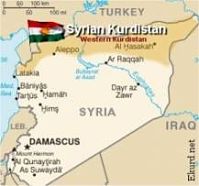
Many of you will sit their and laugh at me, criticize everything I have said and still completely miss the point. Nobody likes to shred the KRG to pieces more than me when they put their foot wrong, my new slogan was "to hell with diplomacy" but we must understand and appreciate they are politicians and they are doing their jobs. We must do ours to, continue to criticize in order to further improve our nation in all aspects because as a Kurd nobody else will ever stick up for you. They will help demand peace and freedom for your people but if it means messing with their country they will never willingly hand over their piece, as we have so obviously seen with Syria. So called activist constantly crying for their people... unity amongst Kurds and Syrians yet the minute West Kurdistan sought some success they were quick to show their true colours. We must stand united in our flaws and in our successes to strongly stand against the injustice committed against our people everywhere and continue the struggle for our dream.
"In September 2005, Massoud Barzani, President of the Kurdistan Regional Government, delivered a speech in the Kurdish city of Dohuk in which he appealed to Turkey, Iran and Syria to change their attitudes towards the Kurds. 'These are new days, not only for the Kurds but also for the countries that have Kurds,' he told his listeners amid bursts of applause. 'Whether they like it or not, we are a nation.' The Kurds, it was clear, believed they already had a homeland. Now they would have to defend it." Baby steps.

Kevin McKiernan (left) interviewed Massoud Barzani, current president of the KRG in 1991. Barzani told the author, " WE do not want the world to remember us as refugees. Our case is political"


Baghdad 2005: Jalal Talabani, the first Kurdish president of Iraq, with Karzan Mahmoud in the green zone. Karzan was the authors driver before he was wounded in a terrorist attack.

Welcome to Kurdistan sign in South Kurdistan.
http://tarafatehi.blogspot.com.au/2012/ ... r.html?m=1