continued:Your morning coffee IS good for you! There has been endless debate in hundreds of scientific studies over whether coffee can really be good for our health.
The answer, much to our relief, is yes.Many studies show it reduces the risk of cognitive decline, liver disease and melanoma, for example. While only one trial specifically relating to coffee and telomere length has been carried out, the news so far is good. Researchers tested whether coffee might improve the health of 40 people with chronic liver disease. Selected at random, half drank four cups of coffee a day for a month, while the others didn’t. Those who drank the coffee had significantly longer telomeres than those who didn’t.
Another finding showed that in a group of more than 4,000 women, those who drank caffeinated coffee (but not decaf) were likely to have longer telomeres. More reasons to enjoy the aroma of your morning coffee brewing!
As for tea, it, too, appears to be good for you. Both black and green tea have health benefits, but green tea may more actively protect against telomere-shortening.
What to eat to slow the clockRather than restricting calories or food groups, we should just focus on eating a good, wholesome diet, full of fibre, vitamins and nutrients.
Research shows this is the way to maintain telomeres, to slow the clock on ageing and restore our youthfulness.
Our food suggestions to fight ageing are simple.This is not a diet or a fad. It’s a way of life. And the food we think you should eat has been carefully selected after scientific research. Thankfully, it’s all tasty, too. Just imagine the food you’d eat when on holiday in Italy, for example.
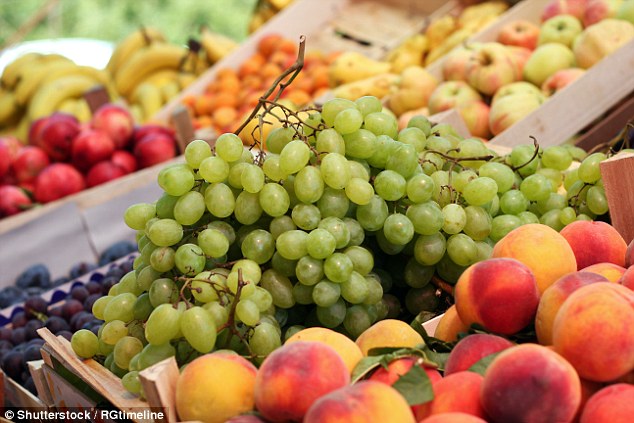
Platters of freshly caught fish, bowls heaped with fruit and vegetables of all colours. Hearty wholegrains — yum!
That’s the kind of eating we want you to embrace: a healthy, satisfying and filling Mediterranean diet, packed with good quality protein, healthy fats, vitamins, minerals and fibre.
Forget counting calories or excessive portion control — just eat delicious food that’s had as little ‘done’ to it as possible. Easy!
And unlike many so-called healthy eating plans, carbs, dairy and fats are all very much on the menu.
This way of eating will keep you younger inside and out — no matter how old you are, or where you live.
In Southern Italy, for example, elderly people who followed the Mediterranean diet had longer telomeres.
The more closely they adhered to this type of diet, the better their overall health and the more they were able to lead a full and happy life.
And in another part of the world, a study of middle-aged and older people in Korea found that those who ate more fish and wholegrains had longer telomeres after ten years than those who ate a diet high in red meat and refined, processed foods.
Wholesome foods can help stop time So why are such wholesome foods good for our telomeres?
Through our research, we’ve pinpointed three enemies in our bodies: inflammation, oxidative stress and insulin-resistance.
First, let’s look at inflammation. This is a cause for many diseases — from cancer to arthritis and coeliac disease to heart disease.
Inflammation in the body automatically increases with age, so much so that scientists have a name for the phenomenon: ‘inflamm-ageing’.
One cause for this age-related inflammation is telomere injury. As we age, the cells in our body become damaged. When this happens, a cell reacts to try to defend the precious DNA it contains. It sends an SOS message to neighbouring immune cells, which try to help it heal.
But shortened telomeres block this SOS call.
They are so preoccupied with trying to protect themselves from further shortening that they refuse to let the help into the cell, presuming it’s an enemy attacker.
The cell keeps shouting for assistance to come in, even though it is never going to get it.
This has disastrous consequences. The damaged cell becomes a bit like a rotten apple in a barrel sending out gases that rot other apples.
The signals it sends for help actually, in time, encourage inflammation throughout the body and damage other cells.
It’s a process we call ‘cell rot’, which makes an ideal environment for cancer, for example, to grow. And all because those telomeres were short.
One of the best ways to protect against the onset of inflammation is to stop feeding it. The sugar in soft drinks, chocolate and cakes, as well as refined carbohydrates such as white bread and pasta, all feed it.
Healthy foods, meanwhile, combat inflammation. 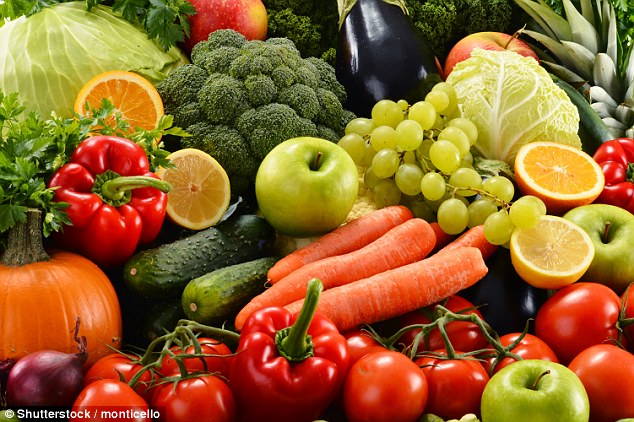
This means foods that are high in omega-3s, such as oily fish and leafy vegetables, and fruit and vegetables high in flavonoids and antioxidants, such as blue and purple berries, tomatoes and kale.
The second enemy of good health is oxidative stress. It’s caused when we have too many free radicals, a kind of corrosive molecule, in our bodies, and not enough antioxidants to mop them up and stop them in their tracks.
Free radicals literally attack our DNA and shorten our telomeres.
The answer? Include more antioxidants in your diet — such as vitamin C and vitamin E.
Again, fruit and vegetables are the best source: from plums to leafy greens. Other sources of antioxidants include nuts, wholegrains and green tea.
As for the third enemy, insulin resistance, as we’ve explained previously it’s caused by excessive sugar in the diet and can lead to diabetes and telomere shortening.
All in all, it makes our task of reducing the amount of sugar we consume even more vital.
That’s the research behind our plan. Perhaps now you understand more about how food can directly affect the tiniest components of our bodies — and invite disease to take a deadly grip on our lives.
So here’s our plan for true cell youthfulness: eat more fruit, vegetables, healthy lean meats and fish, as well as dairy and fats, and reduce red or processed meat and sweetened soft drinks.
Do this and your telomeres will flourish — and you’ll radiate youthful good health.
Most supplements aren't worth it We don’t suggest getting your vitamins and antioxidants from a supplement. At least one study has found that taking a multivitamin is related to shorter telomeres.
As well as this, in other tests, high antioxidant levels even provoked laboratory-grown human cells to take on certain cancerous properties.
It’s a finding that should warn us all it may be possible to have too much of a good thing.
In general, antioxidants from food are better absorbed by the body and may have more powerful effects than those which come from supplements.
Similarly with omega-3 oils, food sources — such as fish and eggs — are best. A few portions of fish a week should be enough to do the trick.
Should you take fish-oil capsules too, though? Research says no, at least not to improve your telomeres. One study found that people who took fish-oil supplements for four months did not have longer telomeres than those who took a placebo.
But the same study also found that the greater the increase in levels of omega-3s compared with omega-6s (those bad polyunsaturated fats found in sunflower oil), the greater the telomere lengthening overall. The jury, it seems, is out.
The one supplement you perhaps should consider (after consulting your doctor, of course) is vitamin D. One study found that a dose of vitamin D3 every day for four months led to an increase in the levels of telomerase —the enzyme essential for telomere growth — by around 20 per cent.
cont: