

European Parliament, Brussels -- Dear Secretary-General, members of Parliaments, delegates, ladies and gentlemen, Good afternoon:
The focus of the international community, since the beginning of the war in Iraq, has been the perplexing insecurity. The primary cause of the prevailing environment of insecurity has been the country's deeply rooted communal war and sectarian conflicts.
In Iraq, as well as in other Middle East regions, where there prevails material lawlessness and persisting animosity among the rival groups, there has been wide-spread abuse and discrimination of persons who belong to particular groups such as a gender (women), age (children and students), religious (Christians and other non-Muslim minorities in the Muslim states), sectarian affiliations (the Shiites, the Sunnis, the Catholics, etc.) and ethnicities (e.g., Assyrians, Turkmen, etc.). As a result, the persons in the targeted groups are subjected to numerous and repeated instances of persecutions, Killings, tortures, displacements, separation of families and other cruel and humiliating treatments.
Due to their distinct ethnic and religious identity, the Assyrians have been habitually persecuted under various regimes, until this day for refusing to recant their ethnicity and their religion. They face systematic and serious assaults on their fundamental human rights on a daily basis by different levels of authority and denying them peace in their multi-ethnic ancestral nation-state: Iraq. The purpose and principles of the Universal Declaration of Human Rights are flagrantly violated and the lack of consistency in the enforcement of equal and inalienable rights of all Iraqis, most specifically in Northern Iraq where the Kurdistan Regional Government (KRG) claims, as per their website, to "believe in the rights and freedoms of all peoples".
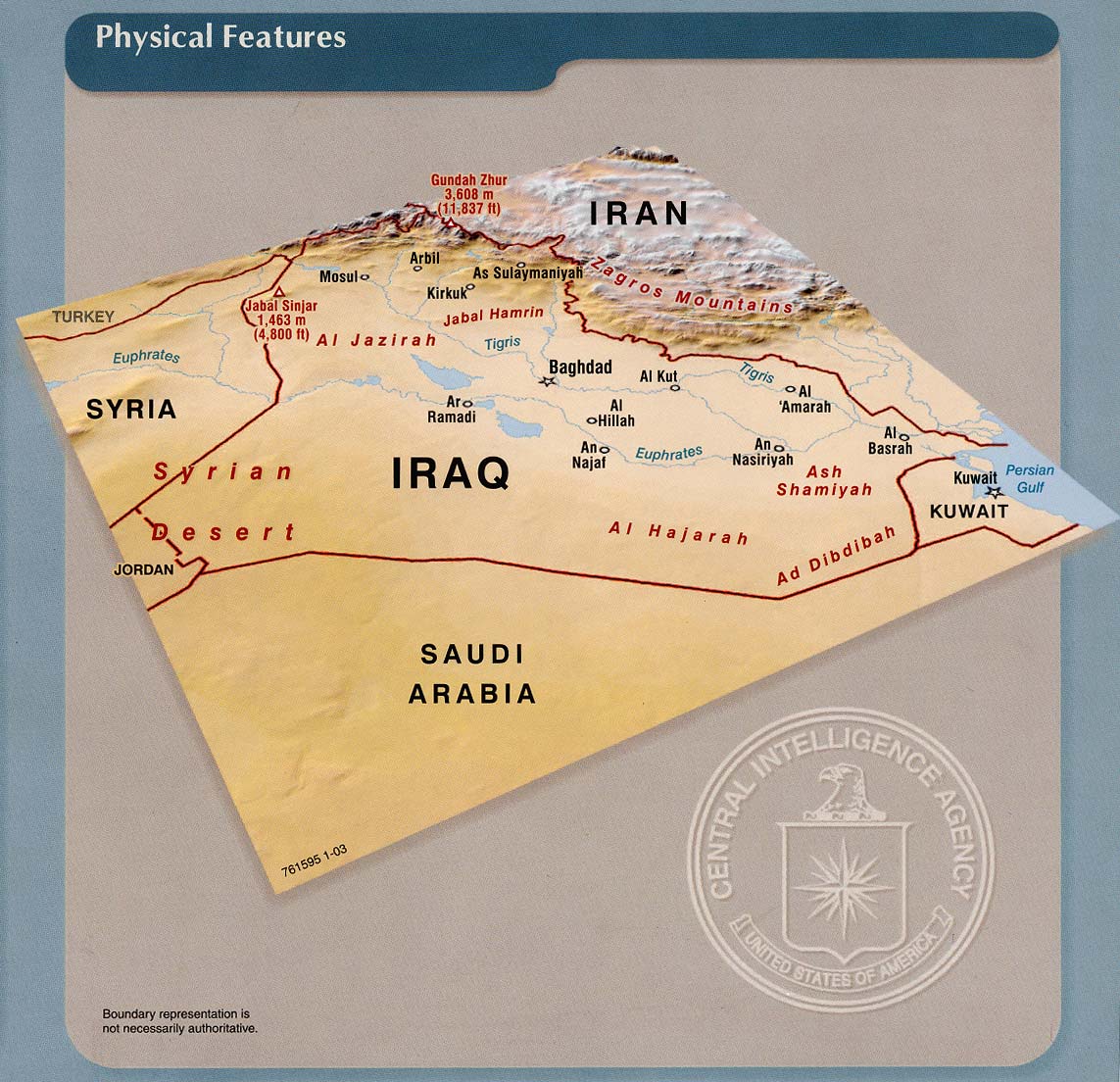
Although Iraq's history speaks for itself, allow me to briefly introduce to you the Assyrian people. The Assyrians are indigenous people of the present day Iraq, descendants of the first people of Mesopotamia. The Assyrian communities, that are predominantly Christian, presently inhabit areas of Tur Abdin and Hakkari in south and eastern regions of Turkey, Jazira in north-eastern Syria, Urmi in north-western Iran, and the Iraqi provinces of Ninawa, Dohuk, and Arbil that is precisely where the Assyrians' ancestral homeland (Assyria) is located.
Since inception of Iraq as a sovereign country, its successive governments and particularly the Ba'ath regimes have consistently targeted and persecuted the Assyrians on national, ethnic, and religious grounds, as part of the regimes' totalitarian and Arabization policies. In the recent history, -- during WWI, WWII, and the years that followed -- the Assyrian population was disproportionately massacred, displaced, and inflicted with widespread persecutions and hardships. They have had their population massacred over the last century.
Forced migrations and now Kurdification policies have scattered Assyrians in nearly fifty countries where they have had to start from scratch struggling to survive and preserve their identity, culture, and history (Diaspora Assyrians). Kurdish authorities have allegedly been expropriating Assyrian lands and villages to deliver them to Kurds according to the American Department of the Secretary of State.
Under these horrifying circumstances which are mostly untold and unreported, Assyrians are driven out of their ancestral homeland. They seek refuge in neighbouring countries where they hope for a safer life.
The wilful disregard of the international community about the Assyrians situation is an outrage and commensurate to the acts of those who have perpetrated these crimes against this indigenous and ancient nation...
For the complete report visit:
http://www.aina.org/news/20070330155634.htm
By Mary Younan
Executive Secretary
Assyrian Universal Alliance